The Flower Reader, by Elizabeth Loupas.
This is the story of young Marina Leslie and her efforts to fulfill the dying wish of Queen Mary of Guise. It is also the story of the politics of betrayal, the lack of voice women had in the sixteenth century, and the reality of court life and the politics of king-making.
Marina, called variously Rinette and Marionette, is a flower reader, but more than that she is a pawn in the hands of those who would determine who is to truly rule Scotland during the reign of Mary Queen of Scots. Right from the beginning her life is out of her own hands, and so this is as much a story of Marina's struggle to win back control of her own life as it is about solving the mystery of who killed her husband and determining the future rule of Scotland.
Overall, this was an intriguing, fascinating book. There were a few spots where the going was slow, but only a very few, and those spots were very brief. I ended up poring through this 400+ page book in two days, that's how interesting it was. There were definitely some real villains in this book, and a couple of real heroes, and all were skillfully drawn and fleshed out so that even where you disliked the character as a person, you still felt he or she was real and alive. That is, I've discovered, a real achievement, as so many writers leave their villains half-drawn, mistaking unfamiliarty for unsmypathy. I loved the mystery that was sometimes the center of the story and sometimes the background, and found it was well written and not overdone. The only quibble I have with the book is that sometimes the extended descriptions of the food and the clothing became tedious. Ultimately, however, this was an immensely enjoyable read, and I wholeheartedly recommend it. 4.5 out of 5.
Monday, May 28, 2012
Katarina
Katarina, by Kathryn Winter.
This is the story of the author's childhood as a non-practicing Jew, but a Jew nonetheless, in World War II Slovakia.
I had a difficult time with this book. The first 2/3 of the book I had to force myself through. It was slow-moving and monotonous, and I really couldn't warm up to any of the characters particularly. About the time young Katarina is taken in by a Protestant orphanage, things began to pick up. Suddenly there were truly likeable characters, and the mood perceptibly lightened. I enjoyed the last 1/3 of the book, up until the prologue. At that point the author decided to give us the bare bones of one or two characters' subsequent lives and to leave us absolutely in the dark as to the rest of the characters' fate, even the major characters. And so, the ending reflected the beginning -- disappointing. I did learn a little bit about Slovakia's war-period history, but only a very little. Ultimately, I was very disappointed in this book that had appeared so promising. 2 out of 5.
This is the story of the author's childhood as a non-practicing Jew, but a Jew nonetheless, in World War II Slovakia.
I had a difficult time with this book. The first 2/3 of the book I had to force myself through. It was slow-moving and monotonous, and I really couldn't warm up to any of the characters particularly. About the time young Katarina is taken in by a Protestant orphanage, things began to pick up. Suddenly there were truly likeable characters, and the mood perceptibly lightened. I enjoyed the last 1/3 of the book, up until the prologue. At that point the author decided to give us the bare bones of one or two characters' subsequent lives and to leave us absolutely in the dark as to the rest of the characters' fate, even the major characters. And so, the ending reflected the beginning -- disappointing. I did learn a little bit about Slovakia's war-period history, but only a very little. Ultimately, I was very disappointed in this book that had appeared so promising. 2 out of 5.
Postcards from No Man's Land
Postcards from No Man's Land, by Aidan Chambers.
Seventeen-year-old Jacob Todd is about to discover himself. Jacob's plan is to go to Amsterdam to honor his grandfather who died during World War II. He expects to go, set flowers on his grandfather's tombstone, and explore the city. But nothing goes as planned. Jacob isn't prepared for love or to face questions about his sexuality. Most of all, he isn't prepared to hear what Geertrui, the woman who nursed his grandfather during the war, has to say about their relationship. Geertrui was always known as Jacob's grandfather's kind and generous nurse. But it seems that in the midst of terrible danger, Geertrui and Jacob's grandfather's time together blossomed into something more than a girl caring for a wounded soldier. And like Jacob, Geertrui was not prepared. Geertrui and Jacob live worlds apart, but their voices blend together to tell one story, a story that transcends time and place and war. By turns moving, vulnerable, and thrilling, this extraordinary novel takes the reader on a memorable voyage of discovery. (Synopsis from Amazon.com)
I absolutely adored this book, and I cannot say enough good things about it. I had high hopes for it, just from the description on the back of the book, but when I started it I was a little nonplussed and immediately thought I was going to hate it, so much so that I very seriously considered just returning it to the library and finding a different book for the Netherlands instead. What I disliked was the fact that in each of the first two chapters the reader was dropped into the middle of the action with no explanation, and very jarringly at that. It was like opening a book in the middle and starting reading there -- that's how confusing and in need of explanation it felt. And then there was what I first thought was either a really bad editing job or a atrocious translation job. Amazingly, however, by the time I started the third chapter I was hooked. I eventually realized that what I took for poor editing or translation was the very intentional device of the author writing as an older Dutch woman who had not used English in a very long time, but who was writing out her memories for the eyes of her young American grandson. All of the characters were spot on, and I came to love them all. I loved falling in love with Amsterdam right along with present-day Jacob, and I was absolutely fascinated by boy-girl Ton. I can truly say that I did not want this story to end. I wanted to keep reading, to watch Jacob's relationship with Hille grow, and to be a fly on the wall to Jacob's very different relationship with Ton. I cannot recommend this book highly enough, though I warn the reader that you will need to barrel through the first two slightly confusing chapters before you get your bearings. It's worth the effort! 5 out of 5.
Seventeen-year-old Jacob Todd is about to discover himself. Jacob's plan is to go to Amsterdam to honor his grandfather who died during World War II. He expects to go, set flowers on his grandfather's tombstone, and explore the city. But nothing goes as planned. Jacob isn't prepared for love or to face questions about his sexuality. Most of all, he isn't prepared to hear what Geertrui, the woman who nursed his grandfather during the war, has to say about their relationship. Geertrui was always known as Jacob's grandfather's kind and generous nurse. But it seems that in the midst of terrible danger, Geertrui and Jacob's grandfather's time together blossomed into something more than a girl caring for a wounded soldier. And like Jacob, Geertrui was not prepared. Geertrui and Jacob live worlds apart, but their voices blend together to tell one story, a story that transcends time and place and war. By turns moving, vulnerable, and thrilling, this extraordinary novel takes the reader on a memorable voyage of discovery. (Synopsis from Amazon.com)
I absolutely adored this book, and I cannot say enough good things about it. I had high hopes for it, just from the description on the back of the book, but when I started it I was a little nonplussed and immediately thought I was going to hate it, so much so that I very seriously considered just returning it to the library and finding a different book for the Netherlands instead. What I disliked was the fact that in each of the first two chapters the reader was dropped into the middle of the action with no explanation, and very jarringly at that. It was like opening a book in the middle and starting reading there -- that's how confusing and in need of explanation it felt. And then there was what I first thought was either a really bad editing job or a atrocious translation job. Amazingly, however, by the time I started the third chapter I was hooked. I eventually realized that what I took for poor editing or translation was the very intentional device of the author writing as an older Dutch woman who had not used English in a very long time, but who was writing out her memories for the eyes of her young American grandson. All of the characters were spot on, and I came to love them all. I loved falling in love with Amsterdam right along with present-day Jacob, and I was absolutely fascinated by boy-girl Ton. I can truly say that I did not want this story to end. I wanted to keep reading, to watch Jacob's relationship with Hille grow, and to be a fly on the wall to Jacob's very different relationship with Ton. I cannot recommend this book highly enough, though I warn the reader that you will need to barrel through the first two slightly confusing chapters before you get your bearings. It's worth the effort! 5 out of 5.
Pope Joan
Pope Joan, by Donna Cross
This novel tells the story of the only woman ever to have been Pope. It starts with her birth to an English father and a Saxon mother, and follows her through long years where education was denied to her, through her seizing of the opportunity to seize her dreams of education by impersonating her brother after he is killed by a Viking raid, and her long struggles to find a place where she belongs, and ultimately to her election as Pope and her death and the revelation of her true gender two years after her ascension to the position.
I found this to be a fascinating, wonderful book. The characterization was interesting, even where I did not particularly like the character, and nothing ever felt forced or unnatural in any of the characters. I also learned quite a lot about how the Papacy and the Christian church worked back in the dark age, as well as about education, the place of women, and medicine in that period. All the time that I was learning, however, I never felt I was being lectured to, or that the author had wandered off on a tangent to the harm of the story being told. I really enjoyed this book. Only one thing that I found to quibble about: There was once scene near the beginning of the book, the scene where we first meet the father and son who will ultimately be Joan's nemesis. The reader is dropped into that scene without explanation, we witness a grisly death -- of who and for what I reason I still do not know -- and then we see no more of these characters until the last third of the book. I never did figure out exactly what happened in that scene and why. Political intrigue of some sort, clearly, by the reasoning was never clear. That one scene I found distracted from the story by its jarring appearance out of nowhere and by its lack of clarity. Otherwise, however, this story was masterfully told. I would give this book a 4.5.
This novel tells the story of the only woman ever to have been Pope. It starts with her birth to an English father and a Saxon mother, and follows her through long years where education was denied to her, through her seizing of the opportunity to seize her dreams of education by impersonating her brother after he is killed by a Viking raid, and her long struggles to find a place where she belongs, and ultimately to her election as Pope and her death and the revelation of her true gender two years after her ascension to the position.
I found this to be a fascinating, wonderful book. The characterization was interesting, even where I did not particularly like the character, and nothing ever felt forced or unnatural in any of the characters. I also learned quite a lot about how the Papacy and the Christian church worked back in the dark age, as well as about education, the place of women, and medicine in that period. All the time that I was learning, however, I never felt I was being lectured to, or that the author had wandered off on a tangent to the harm of the story being told. I really enjoyed this book. Only one thing that I found to quibble about: There was once scene near the beginning of the book, the scene where we first meet the father and son who will ultimately be Joan's nemesis. The reader is dropped into that scene without explanation, we witness a grisly death -- of who and for what I reason I still do not know -- and then we see no more of these characters until the last third of the book. I never did figure out exactly what happened in that scene and why. Political intrigue of some sort, clearly, by the reasoning was never clear. That one scene I found distracted from the story by its jarring appearance out of nowhere and by its lack of clarity. Otherwise, however, this story was masterfully told. I would give this book a 4.5.
Thursday, May 17, 2012
Confessions of Catherine de Medici
Confessions of Catherine de Medici, by C.W. Gortner.
This book, written from the first-person perspective of Catherine de Medici, covers her life from her youth in Italy (too little of her youth, in my opinion) through her roles as French Queen, then Regent to two of her sons, then Queen Mother, to her death.
It is a fascinating story, for the most part well told. When I began the first page, I thought I was going to have to struggle to get into the book as I read the first few sentences. But suddenly I looked up and realized that without noticing it I had somehow read myself to page 50 and was eager to poke my nose back into the book where I'd left off. Needless to say, that particular worry did not materialize. In the end I wound up thoroughly enjoying this book, and learning a fair bit about the infamous woman at its core and about the tumultuous period of French history in which she lived and reigned.
Two minor quibbles. First, the editor appeared to have gotten either tired or lazy at one point about mid-way through, because all of a sudden there were perhaps a half a dozen instances in quick succession where words were left out of sentences, which was a bit distracting. Second, the author presumed a bit too much knowledge or perceptiveness on the part of at least this reader, because I found myself repeatedly puzzled as to the silent agreements reached between people, indicated by smirks and nods and knowing glances. The characters, it seemed, always seemed to know more than I did. I think if some of the private agreements passing between the characters had been spelled out a bit more it would have helped the story a bit.
Nonetheless, over all I found this to be a delightful book, and I don't hesitate to recommend it to anyone who is interested in that period in French history. 4.5 out of 5.
This book, written from the first-person perspective of Catherine de Medici, covers her life from her youth in Italy (too little of her youth, in my opinion) through her roles as French Queen, then Regent to two of her sons, then Queen Mother, to her death.
It is a fascinating story, for the most part well told. When I began the first page, I thought I was going to have to struggle to get into the book as I read the first few sentences. But suddenly I looked up and realized that without noticing it I had somehow read myself to page 50 and was eager to poke my nose back into the book where I'd left off. Needless to say, that particular worry did not materialize. In the end I wound up thoroughly enjoying this book, and learning a fair bit about the infamous woman at its core and about the tumultuous period of French history in which she lived and reigned.
Two minor quibbles. First, the editor appeared to have gotten either tired or lazy at one point about mid-way through, because all of a sudden there were perhaps a half a dozen instances in quick succession where words were left out of sentences, which was a bit distracting. Second, the author presumed a bit too much knowledge or perceptiveness on the part of at least this reader, because I found myself repeatedly puzzled as to the silent agreements reached between people, indicated by smirks and nods and knowing glances. The characters, it seemed, always seemed to know more than I did. I think if some of the private agreements passing between the characters had been spelled out a bit more it would have helped the story a bit.
Nonetheless, over all I found this to be a delightful book, and I don't hesitate to recommend it to anyone who is interested in that period in French history. 4.5 out of 5.
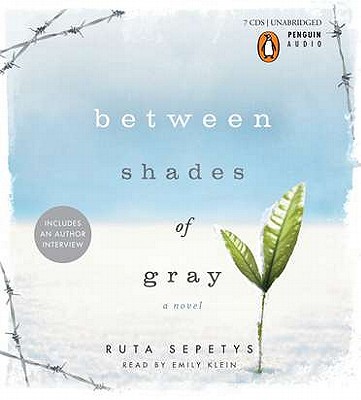
Between Shades of Gray
Between Shades of Gray, by Ruth Sepetys.
This fascinating, haunting, horrifying book begins with what must be one of the most incredible and irresistible first lines ever: "They took me in my nightgown." I dare anyone to read that first line and not be compelled to keep reading to find out who "they" are, where they took the protagonist, and why they took her in her nightgown.
The book focuses on an event that, horrifyingly given its massive scale and the length of time it went on, I had never realized had even occurred: The mass repatriation and genocide of the Balkan peoples by the Soviets following the Soviet Union's usurpation of the Balkan States. I was shocked to my very core by the utter lack of humanity portrayed, though I don't doubt that it is mostly, if not entirely, true to life in the type of treatment that was meted out to those being persecuted. I could hardly bear to read of the events, yet couldn't put the book down, needing to know what happened to these people that, despite their very human faults, I quickly came to care about deeply. This is an important book for the story it tells, of which too few people are aware. I highly recommend this book, but recommend you take along a well-stocked box of tissues as your reading companion on this journey to Siberia. 5 out of 5.
This fascinating, haunting, horrifying book begins with what must be one of the most incredible and irresistible first lines ever: "They took me in my nightgown." I dare anyone to read that first line and not be compelled to keep reading to find out who "they" are, where they took the protagonist, and why they took her in her nightgown.
The book focuses on an event that, horrifyingly given its massive scale and the length of time it went on, I had never realized had even occurred: The mass repatriation and genocide of the Balkan peoples by the Soviets following the Soviet Union's usurpation of the Balkan States. I was shocked to my very core by the utter lack of humanity portrayed, though I don't doubt that it is mostly, if not entirely, true to life in the type of treatment that was meted out to those being persecuted. I could hardly bear to read of the events, yet couldn't put the book down, needing to know what happened to these people that, despite their very human faults, I quickly came to care about deeply. This is an important book for the story it tells, of which too few people are aware. I highly recommend this book, but recommend you take along a well-stocked box of tissues as your reading companion on this journey to Siberia. 5 out of 5.
Under a Red Sky
Under a Red Sky, by Haya Leah Molnar.
This is a memoir of the author's childhood as a Jew growing up in Communist Romania in the 1950's and early 1960's.
To be perfectly honest, this book was a bit of a disappointment. Rather than having a plot, per se, it seemed to unfold more as a series of snapshots of incidents in her young life, and I felt as if the story suffered for the lack of plot tying everything together and keeping things moving. In addition, virtually none of the characters, beyond the author herself and one or two others -- most notably her young neighbor and schoolmate and one of the merchants at the open air market -- were the least bit sympathetic. One got the impression that the author either disliked or was embarrassed by virtually her entire family. As a result, it was really hard to work up any real interest in what happened to them. Furthermore, while classified as young adult non-fiction, anyone without a prior awareness of the Communist Romanian society, and particularly a young adult, will likely be a bit confused by the references to the Securitate that are scattered throughout the book without any real in depth explanation of who they were, what their function was, and what their relationship to the government leaders was.
I do have to admit that there is one wickedly funny scene about 2/3 of the way through the book, where they are preparing for a costume party. That one scene, however, is not enough to save this book from the glowering cloud of darkness that permeates this book. Unfortunately, I would not recommend this book, and probably would not have finished it had I not been reading it for the European Reading Challenge. 2 out 5.
This is a memoir of the author's childhood as a Jew growing up in Communist Romania in the 1950's and early 1960's.
To be perfectly honest, this book was a bit of a disappointment. Rather than having a plot, per se, it seemed to unfold more as a series of snapshots of incidents in her young life, and I felt as if the story suffered for the lack of plot tying everything together and keeping things moving. In addition, virtually none of the characters, beyond the author herself and one or two others -- most notably her young neighbor and schoolmate and one of the merchants at the open air market -- were the least bit sympathetic. One got the impression that the author either disliked or was embarrassed by virtually her entire family. As a result, it was really hard to work up any real interest in what happened to them. Furthermore, while classified as young adult non-fiction, anyone without a prior awareness of the Communist Romanian society, and particularly a young adult, will likely be a bit confused by the references to the Securitate that are scattered throughout the book without any real in depth explanation of who they were, what their function was, and what their relationship to the government leaders was.
I do have to admit that there is one wickedly funny scene about 2/3 of the way through the book, where they are preparing for a costume party. That one scene, however, is not enough to save this book from the glowering cloud of darkness that permeates this book. Unfortunately, I would not recommend this book, and probably would not have finished it had I not been reading it for the European Reading Challenge. 2 out 5.
Subscribe to:
Posts (Atom)